
Imagine, if you can, that humans no longer occupied Planet Earth. What would happen to the remaining infrastructure?
In a hauntingly beautiful visit to Inishark, situated off the rugged West Irish Coast, my family and I were granted a unique and privileged view of nature’s indomitable power to reclaim a once-thriving human infrastructure. Our expedition, for a video shoot of my Hermitage Suite track ‘As Wise As A Serpent,’ presented an awe-inspiring spectacle of a world where humans no longer occupied the planet.
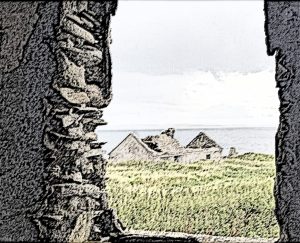
Tragically, on October 20th, 1960, the island’s population faced numerous catastrophes, forcing an evacuation as they found themselves marooned without vital medical and essential supplies. Now, the remnants of Inishark bear witness to an astounding process of natural reclamation, with its former buildings serving as havens for flourishing rare birds and new wildlife amid the untamed Atlantic extremes. The once bustling hub of civilization has been reduced to mere grazing grounds for sheep, the sole population of this deserted paradise.
Our visit to the island was nothing short of eerie, shared with our family and no other human soul in sight. The dilapidated pier has borne the brunt of nature’s wrath, leaving us with no choice but to cautiously leap onto a small rock landing point from our boat – a precarious feat in itself. Twenty scattered small cottages stand testament to the passage of time. Moss and grass have reclaimed their contours to a more rugged natural sketch. The remains of St Leo’s Church are the centrepiece of the village with only sheep as its regular parishioners. We found an art gallery within the ruins of the schoolhouse, curated by Dublin artists and schoolchildren from neighbouring Inishbofin – a ray of vibrancy amidst the desolation.
As we lay as a family upon the remains of the pier, basking in the warm embrace of August sunshine, silence enveloped us, broken only by the rhythmic lapping of waves against the rocks and the distant barks of curious seals. An emotional moment ensued as I shared the final track of The Hermitage Suite with my cousin, accompanied by the stirring voice of my late father, invoking the spirit of this long-lost civilization.
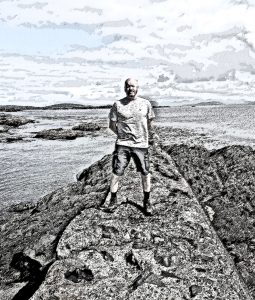
To witness nature reclaiming its domain so powerfully compels a deep contemplation of our responsibility to safeguard our planet. The surrounding waters, a crystal-clear testament to nature’s resilience, contrast starkly with the murky brown and grey tides of The North Sea near my home of Teesside. Regrettably, our once-pristine waters have fallen victim to contamination, purportedly caused by an elusive “unusual algae bloom,” (well that is what our Government claims!) The Government has gone on record to say that the death of the North East Coast’s marine life has not been caused by the two centuries of industrial chemicals that have recently been dredged up from The River Tees’ recent widening. Nor have they died due to the deadly poisons carried by rainwater from the newly reclaimed Teesworks site. Time may one day reveal the truth.
In contrast, the islands of Inishbofin and Inishark exemplify a pristine environment, untouched by the litter of plastic debris that now plagues many of our coastlines. If plastic or other pollutants were ever to defile these serene islands, they would surely be carried from distant shores, as the residents of these lands harbour far more respect for their surroundings than many others.
In light of such ecological observations, we must confront the profound notion that Planet Earth may one day decide to reclaim its future by eradicating its greatest blight: humanity itself. In that hypothetical future, a newer, friendlier ecosystem, like the one witnessed on Inishark today, could flourish, painting a vivid picture of harmony between nature and life.
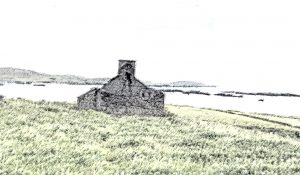
Our expedition to Inishark was indeed a rare privilege, providing us with some very special memories. It has been a vivid reminder of the delicate balance between humanity and the planet we call home. As we reflect on the mesmerising beauty of this reclaimed wilderness, the call to safeguard our environment echoes with renewed urgency, lest we bequeath a devastating legacy to the generations that follow.

Be the first to comment